

How long should a resume be? It’s one of the most common questions job seekers ask - and for good reason. According to Zety, nearly 25% of recruiters spend less than 30 seconds reviewing a resume, which means every line has to earn its place. The right length can make your application easy to scan and highlight your best qualifications. The wrong length can bury your strengths or make you look unfocused.
The truth is, there isn’t a one-size-fits-all answer. Resume length depends on your career stage, industry, and the role you’re applying for. A recent graduate’s resume looks very different from a senior executive’s, and recruiters expect that. Understanding these nuances helps you present the right amount of detail without overwhelming the reader.
In this guide, we’ll cover:
✅ The ideal resume length for different career stages
✅ How resume length influences recruiter perceptions
✅ Mistakes to avoid when it comes to page count
✅ Practical tips for writing concise, effective resumes
✅ Examples of resumes with the right balance of detail and clarity
By the end, you’ll know exactly how to tailor your resume’s length so it communicates the right information - and improves your chances of landing interviews.
When it comes to resume length, the “golden rule” is relevance. A one-page resume may work for some, but it’s not a hard requirement across all roles and career stages. The real question is: Does your resume include only the most relevant information a hiring manager needs to make a decision?
1. What’s the Ideal Resume Length?
When it comes to resume length, the “golden rule” is relevance. A one-page resume may work for some, but it’s not a hard requirement across all roles and career stages. The real question is: Does your resume include only the most relevant information a hiring manager needs to make a decision?
General Guidelines by Page Count
1 page: Best for recent graduates, entry-level applicants, and professionals with fewer than 10 years of work experience.
1–2 pages: Standard for most mid-career professionals who need space to showcase skills, work experience, and measurable achievements.
2+ pages: Acceptable for senior leaders, executives, and academia where detailed career histories, publications, or projects are expected.
Why Length Matters
First impressions: Recruiters often skim, and a cluttered or overly long resume can signal a lack of focus.
Readability: Resumes with clean formatting and concise bullet points are easier to digest quickly.
ATS (Applicant Tracking Systems): Length itself doesn’t hurt ATS scans, but filler text can dilute important keywords.
👉 Pro Tip: Instead of asking “How long should my resume be?” ask “What information will help me land this job?” If a detail doesn’t support that goal, cut it.
2. Resume Length for Different Career Stages
Not every job seeker needs the same amount of space to showcase their background. A resume should grow with your career - but only with relevant experience. Here’s how to adjust length based on where you are:
Entry-Level & Recent Graduates
Recommended length: 1 page
Focus areas: education, internships, projects, volunteer work, and transferable skills
Why: Recruiters don’t expect extensive work history. Clarity and potential matter more than length.
Example phrasing for bullet points:
“Managed a student team of 5 to deliver a market research project, increasing survey response rate by 30%.”
Mid-Career Professionals (5–10 Years Experience)
Recommended length: 1–2 pages
Focus areas: relevant work experience, measurable achievements, leadership roles
Why: At this stage, your career history is more substantial, but relevance is key — don’t list every job since high school.
Example phrasing for bullet points:
“Led a cross-functional team of 12, streamlining operations and reducing costs by 15%.”
Career Changers
Recommended length: 1–2 pages
Focus areas: transferable skills, relevant training, projects aligned with the new field
Why: You’ll need space to highlight how your past experience connects to your target role.
Example phrasing for bullet points:
“Transitioned from teaching to instructional design by creating 20+ e-learning modules adopted company-wide.”
Senior-Level & Executives
Recommended length: 2 pages (occasionally 3 for academia or technical CVs)
Focus areas: leadership impact, strategy, high-level achievements, board or publication experience
Why: At this level, employers expect a more detailed record of responsibilities and results.
Example phrasing for bullet points:
“Directed a $50M business unit with 200+ employees, achieving 20% year-over-year revenue growth.”
👉 Rule of thumb: One page per 10 years of experience is a useful benchmark, but never sacrifice clarity for word count.
3. How Resume Length Impacts Recruiter Perception
A resume isn’t just a list of jobs - it’s a signal to recruiters about how you communicate. Too short, and it may look like you lack experience. Too long, and it can come across as unfocused.
What Recruiters Actually Look For
Relevance over length: Hiring managers care most about whether your experience matches the job description.
Scan-friendly content: Recruiters typically spend 7–10 seconds on an initial scan (Indeed). They want bullet points, not dense paragraphs.
Keywords that match the role: Applicant Tracking Systems (ATS) highlight resumes with the right keywords, regardless of length.
Myths About Resume Length
Myth: A resume must be one page.
Reality: A one-page resume works for recent graduates or early careers, but mid-level and senior professionals often need two.
Myth: Recruiters won’t read past page one.
Reality: They will - if the first page is strong enough to spark interest.
Myth: More detail always helps
Reality: Extra length filled with irrelevant jobs or outdated skills can weaken your application.
The Psychology of Length
Concise = confident. A tightly written resume shows you know how to prioritize.
Overly long = unfocused. Recruiters may assume you don’t understand what’s important to the role.
Right-sized = professional. A resume that’s the correct length for your career stage signals judgment and credibility.
👉 Pro Tip: Instead of thinking about “fitting everything in,” ask yourself: Would this detail help a hiring manager decide to interview me? If not, leave it out.
🔗 For more insights on recruiter behavior, check Harvard Career Services resume guidelines.
4. Tips for Writing a Concise, Effective Resume
A concise resume doesn’t mean leaving out important details - it means presenting the most relevant information in a way that’s easy to scan. Here’s how to strike the right balance:
Eliminate Unnecessary Information
Drop outdated jobs (anything over 10–15 years old unless highly relevant).
Remove generic skills like “Microsoft Word” that aren’t differentiators.
Cut filler phrases such as “responsible for” - recruiters prefer action-driven language.
Use Bullet Points Strategically
Aim for 3–6 bullet points per role.
Keep each to 1–2 lines.
Start with action verbs (e.g., Led, Developed, Increased, Implemented).
Example:
“Increased customer retention by 20% by launching a new onboarding process.”
Quantify Achievements Wherever Possible
Numbers stand out in a recruiter’s quick scan. Compare:
Weak: “Managed a sales team.”
Strong: “Managed a sales team of 8, exceeding quarterly targets by 15%.”
Tailor to the Job Description
Mirror keywords from the job posting.
Prioritize skills and experience that directly align with the role.
Move irrelevant details down or cut them entirely.
Leverage Formatting for Clarity
Use clear section headers (Experience, Skills, Education).
Add white space - it improves readability.
Choose a simple, professional font like Arial or Calibri.
👉 Pro Tip: If trimming feels tough, draft a “master resume” with everything, then create a tailored version for each application. Download free resume templates here.
5. Common Resume Length Mistakes (and Fixes)
Even strong candidates can lose opportunities if their resume feels bloated or incomplete. Here are the most frequent resume length mistakes - and how to fix them.
Mistake 1: Listing Every Job You’ve Ever Had
Why it hurts: Including unrelated or very old roles distracts from your relevant experience.
Fix: Focus on the last 10–15 years and summarize older jobs in a single line, if at all.
Mistake 2: Using Long Paragraphs Instead of Bullet Points
Why it hurts: Dense text is harder to scan. Recruiters may skip key details.
Fix: Convert paragraphs into bullet points. Keep each one concise, starting with an action verb.
Mistake 3: Overstuffing With Keywords
Why it hurts: Applicant Tracking Systems (ATS) flag important keywords, but stuffing makes your resume look unnatural.
Fix: Use keywords thoughtfully - mirror the job description without repeating the same word endlessly.
Mistake 4: Cutting Too Much to Fit One Page
Why it hurts: Oversimplifying can make you look underqualified.
Fix: If you have 7+ years of experience, a 2-page resume is perfectly acceptable. Just keep it focused.
Mistake 5: Ignoring Formatting and White Space
Why it hurts: Even a well-written resume can feel overwhelming if it’s cluttered.
Fix: Use consistent formatting, section headers, and spacing to make your resume easy on the eyes.
👉 Pro Tip: A resume is like real estate - use the space wisely. Prioritize accomplishments that prove you’re the right fit for the job.
6. Examples of Well-Structured Resumes with Optimal Length
Sometimes the easiest way to understand resume length is to see it in action. Below are examples of how different career stages translate into well-balanced, effective resumes.
Example 1: 1-Page Resume for a Recent Graduate
Key features: Education at the top, internships, relevant coursework, and a skills section.
Sample bullet point:
“Designed a social media campaign for a student club that increased engagement by 45%.”
Why it works: It’s concise, tailored, and highlights transferable skills without filler.
Example 2: 2-Page Resume for a Mid-Career Professional
Key features: Work experience with measurable results, leadership roles, and professional certifications.
Sample bullet point:
“Implemented a new CRM system that reduced customer response time by 30%.”
Why it works: The second page adds depth without repetition, focusing on achievements relevant to the role.
Example 3: 2+ Page Resume for an Executive
Key features: Strategic leadership roles, board memberships, publications, or industry presentations.
Sample bullet point:
“Directed $120M business unit, achieving record-breaking revenue growth of 25% year-over-year.”
Why it works: At this level, recruiters expect broader scope and impact - detail supports credibility.
👉 Pro Tip: Use bullet points to spotlight relevant achievements. If an experience doesn’t strengthen your candidacy, cut or condense it.
7. How to Showcase Your Strengths Beyond 2 Pages
If you’re struggling to trim your resume down, you’re not alone. Many professionals - especially those with 15+ years of experience, multiple certifications, or diverse career paths - worry that limiting themselves to 1–2 pages will leave out important details.
Here’s the good news: you don’t need to cram everything onto your resume. Think of it as your front door, not the whole house. The goal is to spark recruiter interest, not tell your full story.
Smart Ways to Go Beyond Two Pages Without Hurting Your Resume
Create a Master Resume: Keep a comprehensive document with all your jobs, projects, and achievements. Then cut it down to a tailored 1–2 page version for each application.
Use LinkedIn Strategically: Your LinkedIn profile has no page limit. Include full work history, detailed descriptions, and project highlights there. Add your profile link to your resume header.
Add a Portfolio or Project Link: If your field values work samples (marketing, design, engineering, academia), include a link to an online portfolio or case study page.
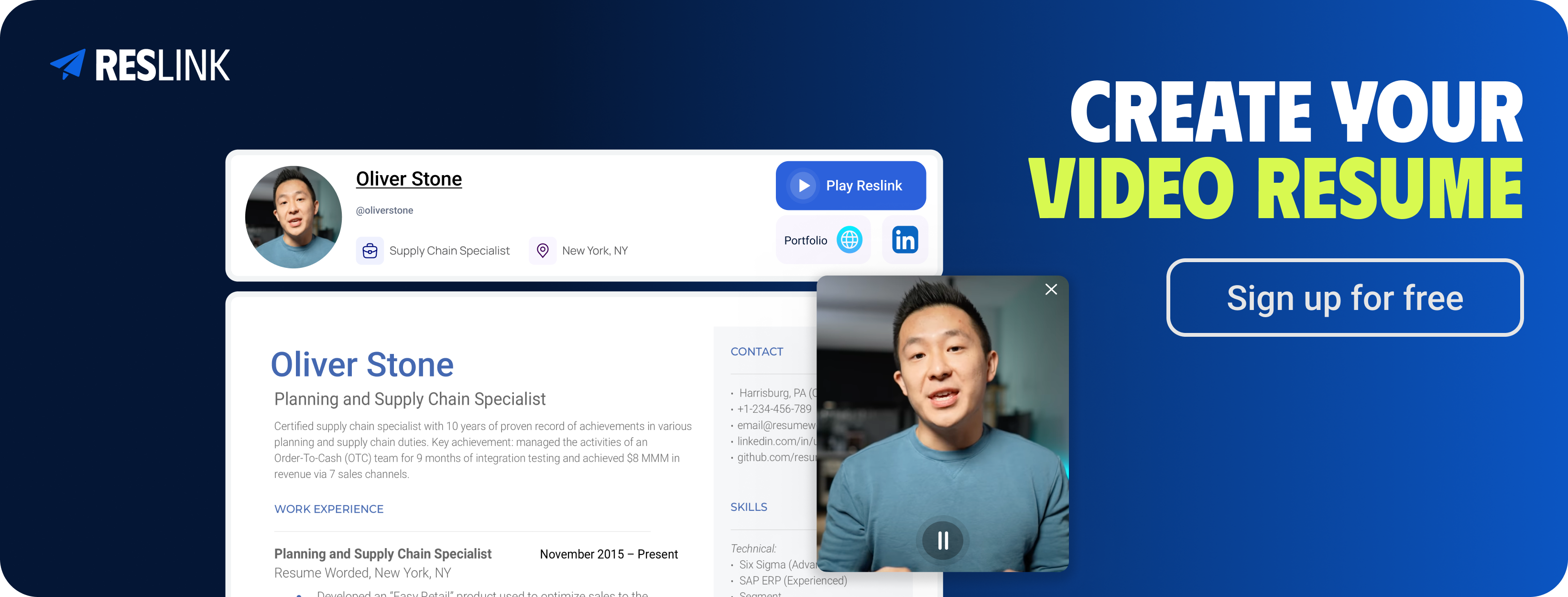
Leverage a Video Resume: Use a short video to showcase soft skills like communication, leadership, or problem-solving that don’t always shine on paper.
👉 Pro Tip: Recruiters care more about clarity than completeness. If your resume is clear and focused, they’ll explore your LinkedIn, portfolio, or video link for more context.
8. How Reslink Helps You Balance Resume Length and Impact
Worried about cutting details to keep your resume concise? Reslink helps you move those extra points into a video format recruiters will actually remember.
Here’s how:
✅ Tailored Resumes: Create focused versions for each application.
✅ Easy Sharing: Add a secure link or badge directly to your resume.
✅ Built-In Teleprompter: Stay concise while sounding natural on camera.
✅ PitchAI Script Writer: Generate a script that complements your resume without repeating it.
✅ Engagement Insights: See how recruiters interact with your video.
👉 By combining a well-sized resume with a Reslink video, you keep your application concise and give recruiters a reason to remember you.
Key Takeaways
Resume length isn’t about hitting a perfect number of pages - it’s about showing the right information at the right depth for your career stage. The strongest resumes are focused, scannable, and tailored to the job.
Key Takeaways:
Entry-level & recent graduates: Stick to 1 page, highlight education, projects, and internships.
Mid-career professionals: Use 1–2 pages to show relevant experience and measurable achievements.
Executives & academia: 2+ pages are acceptable when detailing leadership impact or research.
Quality > quantity: Every bullet point should connect directly to the role you’re targeting.
Recruiter psychology: Concise resumes feel confident, while unfocused ones feel weak.
The right length won’t land you a job on its own - but the wrong one can cost you an interview. By trimming the fluff and highlighting what matters, you give recruiters exactly what they need to see.
FAQs (Frequently asked questions)
1. Is 2 pages too long for a resume?
No - 2 pages is perfectly fine if you have enough relevant experience to justify the space. In fact, many mid-career and senior-level professionals use 2 pages to highlight their achievements. The key is to avoid repetition and filler. If you’re adding content just to “fill space,” recruiters will notice. Instead, focus on quantifiable results, leadership roles, and skills aligned with the job description.
2. Can a resume be more than 1 page?
Yes. The old “one-page rule” is outdated. A one-page resume works well for students, recent graduates, and entry-level candidates with limited experience. But once you have more than 5–7 years of work history, it’s both common and expected to go to two pages. Recruiters want to see enough detail to understand your career progression - as long as the content is relevant and easy to scan.
👉 Rule of thumb: One page for early-career, two pages for experienced professionals, and occasionally more for executives or academia.
3. How can I showcase my strengths without going over 2 pages?
If you feel like you’re leaving important things out, think about layering your application materials:
Use your LinkedIn profile as the full version of your resume. Add detailed descriptions and older work experience there.
Include a portfolio link (for fields like design, marketing, writing, or engineering) to showcase projects that don’t fit on your resume.
Add a Reslink video resume badge - recruiters can click to watch a 60–90 second pitch where you highlight leadership, teamwork, or other strengths that don’t always show on paper.
This keeps your written resume concise while still giving employers the chance to see your full story.
4. Do hiring managers really prefer a one-page resume?
It depends on the role. For entry-level positions, internships, or recent graduates, 1 page is expected. But for professionals with 5+ years of work experience, 2 pages is often the norm. Recruiters aren’t penalizing you for length - they’re penalizing for irrelevance. A 1-page resume packed with filler is weaker than a focused 2-page resume with strong bullet points.
5. What’s the 30-second rule for resumes?
Studies show recruiters spend 7–30 seconds scanning a resume before deciding whether to keep reading. That doesn’t mean they won’t go deeper - it just means the top half of page one matters most. Place your most relevant experience, skills, and keywords where they’ll be seen immediately. This is why formatting and clarity often matter more than whether your resume is one or two pages long.
6. Should I cut older jobs to save space?
Yes - especially if they don’t relate to the role you’re targeting. A good rule of thumb is to focus on the last 10–15 years of experience. For older roles, you can either:
Drop them completely
Summarize in a single line (e.g., “Additional experience in sales and customer service, 2005–2010”)
This shows career continuity without taking up valuable space.
7. How can a video resume help if my written resume feels crowded?
A video resume lets you showcase skills and traits that can’t be fully expressed on paper - like confidence, enthusiasm, or communication ability. For example, if you’re cutting down leadership stories or project details to fit 2 pages, you can bring those back into your video.
With Reslink, you can:
Add a video resume badge to your PDF resume for easy recruiter access
Use PitchAI to script a compelling story that complements (but doesn’t duplicate) your resume
Track recruiter engagement to see who watched your video and what kept their attention
This way, your resume stays sharp and concise while your video gives recruiters the bigger picture.