
Every job seeker has asked the same question: what actually makes recruiters notice me? Traditional resumes are still the norm, but in a competitive job market, standing out takes more than a piece of paper. That’s where video resumes come in.
But here’s the real question: Do video resumes actually increase your chances of landing an interview - or are they just another trend?
To find out, we ran a simple but powerful experiment. We applied for 30 jobs with nearly identical profiles and resumes.
For 15 jobs, we submitted only a traditional resume.
For the other 15 jobs, we sent a video resume link directly to recruiters on LinkedIn.
In this blog, we’ll break down what we learned, why video resumes work, and how you can use them to increase your own chances of getting hired.
1. What Is a Video Resume (and How It Works)
A video resume is a short video clip where you introduce yourself to a recruiter or hiring manager, highlight your key skills, and explain why you’d be a good fit for a role. It’s designed as a modern add-on to a traditional resume - not a replacement.
Unlike a written resume, which focuses on listing your work experience and qualifications, a video resume gives you the chance to demonstrate communication skills, personality, and confidence - qualities that are harder to convey in writing.
Here’s how it typically works:
Recording: Most video resumes are 60-90 seconds long, filmed on a phone or computer.
Structure: A clear format works best - start with a brief introduction, highlight 2–3 key achievements or skills, and close with a call to action.
Sharing: The video can be sent as part of a job application or directly shared with recruiters and hiring managers on LinkedIn.
Engagement: In some cases, you can track when a recruiter has viewed your video, giving you insight into your application’s reach.
👉 The key thing to remember: a video resume isn’t meant to replace your written resume. It adds another layer to your job application - one that can make you more memorable in a competitive job market. You can learn more about what a video resume is here.
2. The Experiment: Do Video Resumes Really Make a Difference?
We wanted to go beyond theory and test whether video resumes truly increase interview chances. To do this, we ran a small but telling experiment.
Over several weeks, we applied to 30 Head of Marketing roles across job boards such as LinkedIn, Otta, and others. The goal wasn’t just to land a job, but to measure how much of a difference a video resume (plus networking) makes compared to a traditional, passive application.
Here’s how we structured the experiment:
Batch 1 (Traditional approach): We applied to 15 roles using a standard resume and cover letter - no networking, no video add-ons.
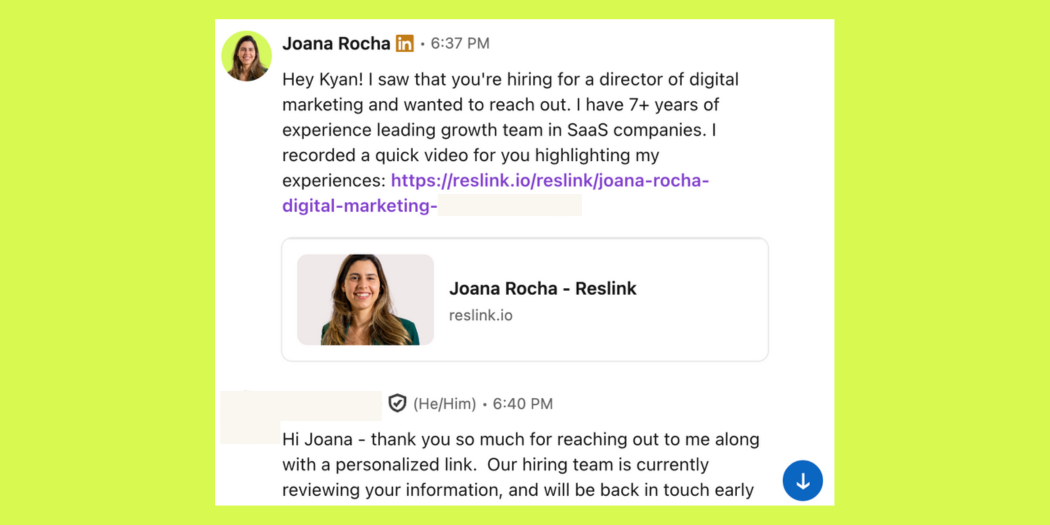
Batch 2 (Video resume approach): For another 15 roles, we applied with the same written resume but also sent recruiters and hiring managers a video resume link in a personalized LinkedIn connection request.
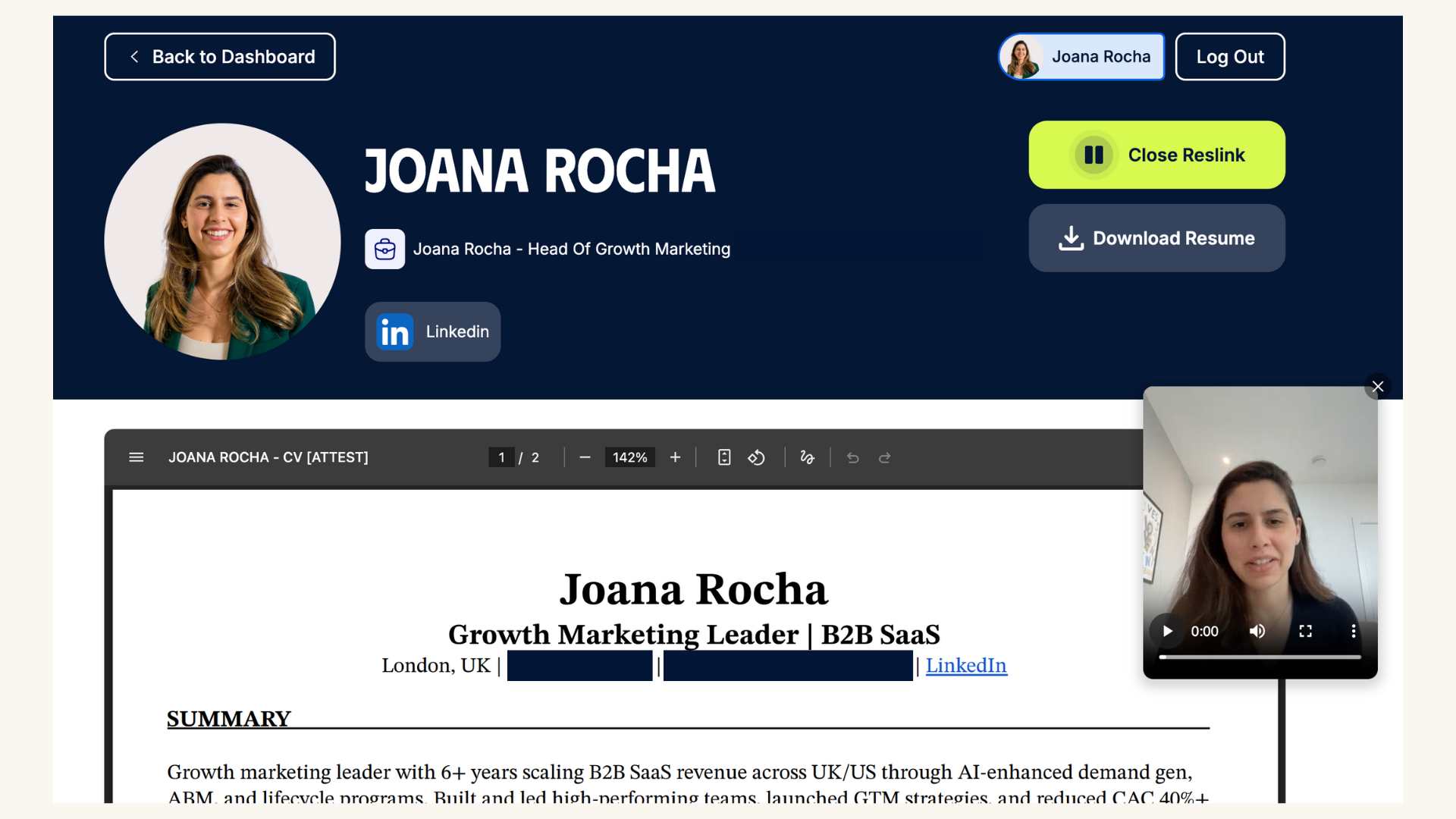
Here’s exactly how we tested it: for every application in the second batch, we reached out directly to the recruiter or hiring manager with our Reslink video resume link. Instead of sending just a CV, we included both the written resume and the video pitch in one easy-to-access link.
Example outreach message used:
The Experiment Results
The contrast between the two batches couldn’t have been clearer.
When we applied using only a traditional resume, even with tailored applications, the results were discouraging - just 1 interview out of 15 applications. This reflects a broader reality of today’s competitive job market: without networking or finding a way to stand out, your application often gets lost in a sea of hundreds of others.
But when we combined a written resume with direct outreach to recruiters and hiring managers on LinkedIn - and included a short video resume link in the message - the response was dramatically different. Out of 15 applications, we landed 6 interviews, a nearly 50% conversion rate. Recruiters were opening the Reslink videos before following up, which shows the video was doing exactly what it was meant to: capturing attention and making us memorable.
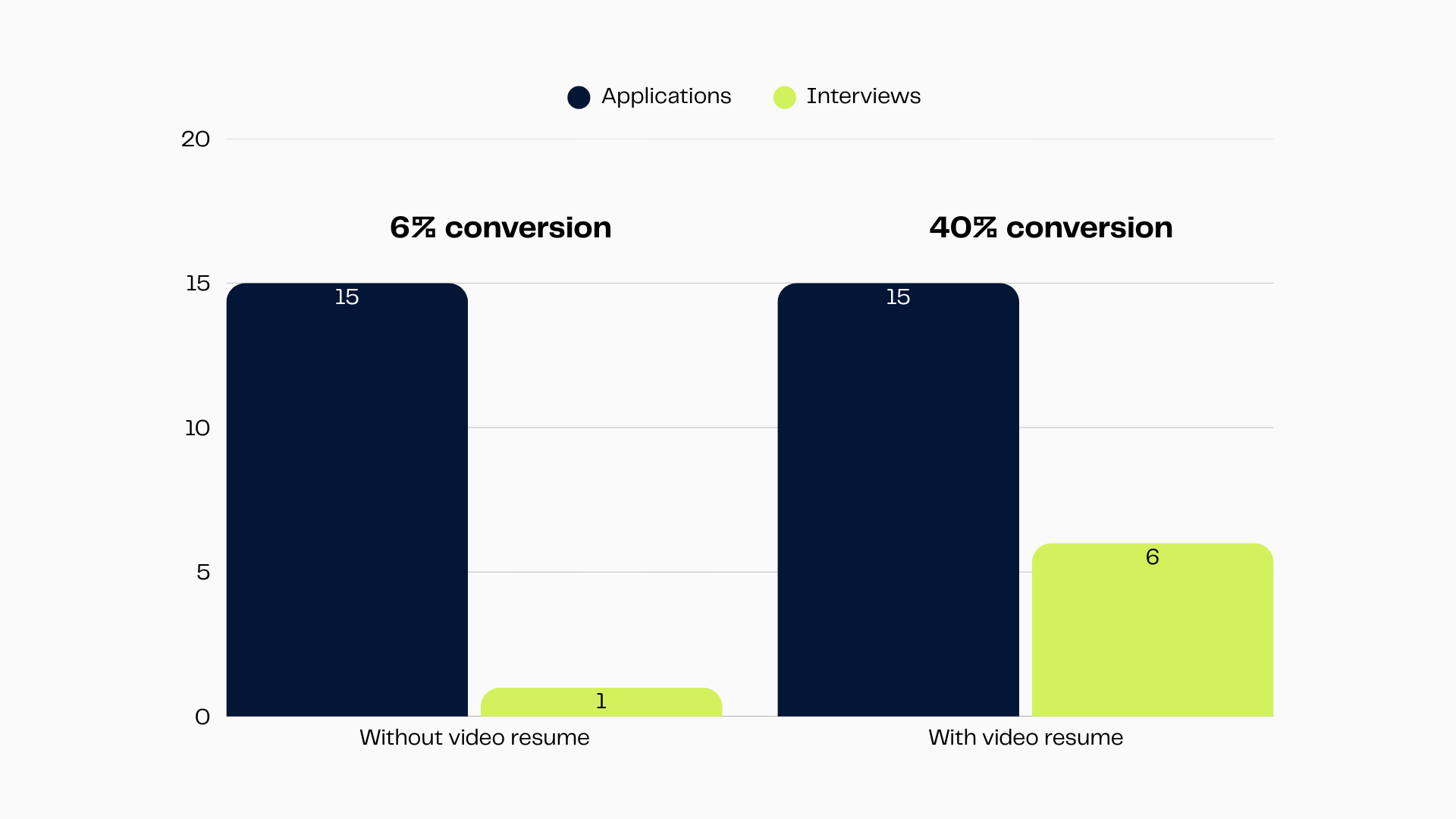
Batch 1 (Traditional): Out of 15 applications, only 1 interview was secured - a 7% conversion rate from application to interview.
Batch 2 (Video Resume + Networking): Out of 15 applications, 6 interviews were secured - a 40% success rate, almost 6x higher.
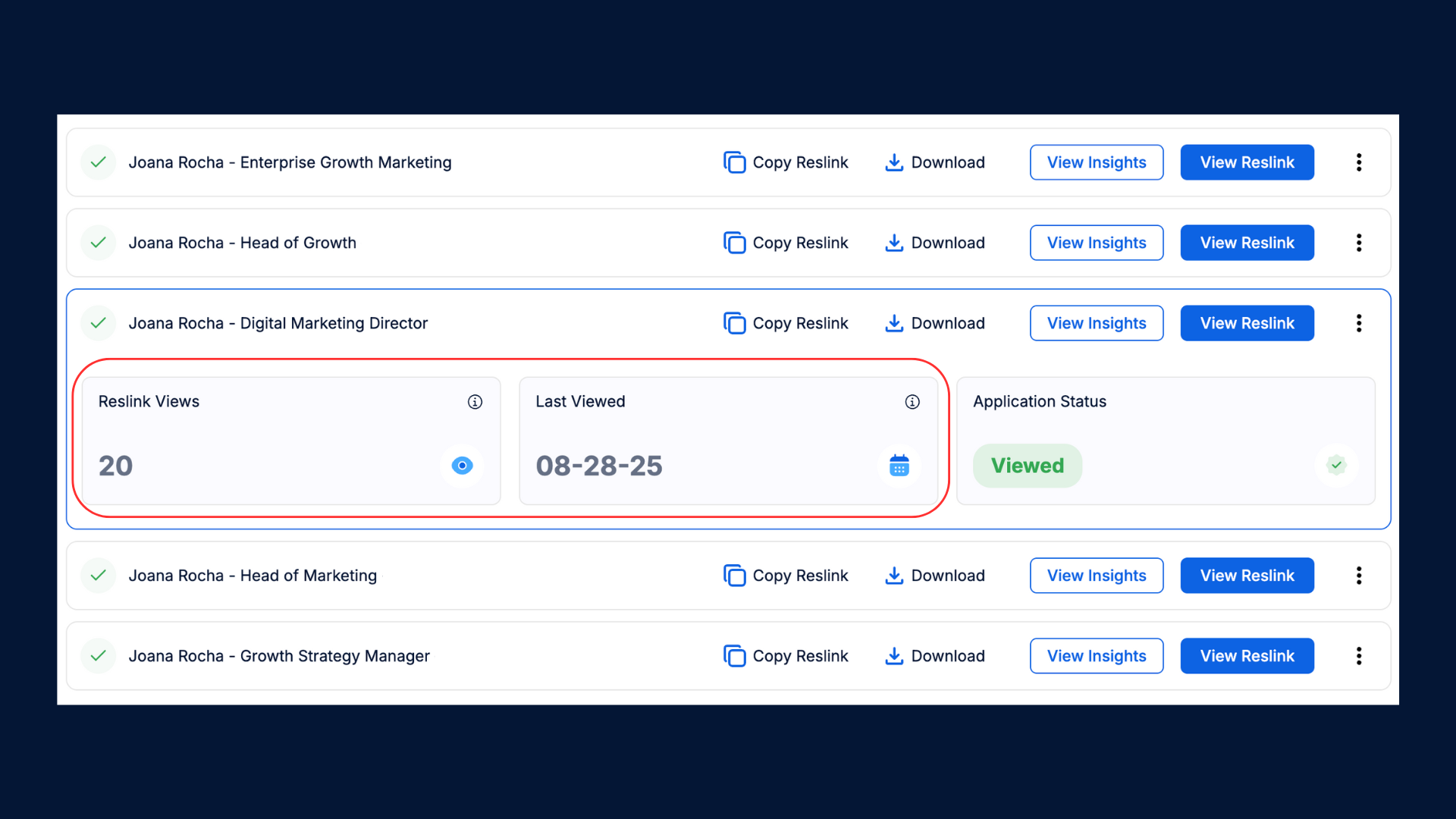
But the numbers only tell part of the story. When we reviewed the analytics from the video links, we saw a consistent pattern:
Recruiters opened and watched the video before scheduling interviews.
In some cases, the video was watched multiple times - suggesting it was even shared with colleagues or hiring managers.
The LinkedIn outreach itself increased visibility: instead of being one of 200+ faceless applicants in an ATS, the recruiter now had a name, face, and a short pitch attached to the role.
What This Tells Us About Today’s Job Market
This experiment reflects a bigger truth about hiring today:
Applications alone rarely cut it. Recruiters are overwhelmed with hundreds of applications per role. Without networking, your resume often gets lost in the pile - no matter how polished it is.
Video makes you more human. A written resume can only go so far. A 60–90 second video puts your communication skills, energy, and personality front and center, helping you stand out instantly.
Networking multiplies your odds. By sending a connection request with a video, you’re not just another applicant - you’re someone who made the effort to connect personally. That extra step signals genuine interest and professionalism.
👉 Takeaway: A video resume paired with proactive networking can increase your chances of getting an interview by nearly 6x.
3. Why Video Resumes Work (The Psychology)
On paper, every job application looks more or less the same - a list of work experience, education, and skills. Recruiters are trained to scan quickly and move on. That’s why traditional resumes often blend together.
A video resume breaks that pattern because it taps into how people actually connect and remember information. Here’s why they work:
1. Human connection beats text.
When a recruiter hears your voice and sees your expressions, they form an immediate impression of your personality, enthusiasm, and confidence. These subtle cues build trust faster than words on a page ever can.
2. Visual storytelling sticks.
Psychology studies show that people remember visuals far better than text alone. A short video clip showcasing your communication skills makes you more memorable in a sea of written resumes.
3. Faster judgment of “fit.”
Hiring isn’t only about qualifications - it’s about whether you’d be a good fit for the team. Video helps recruiters assess your soft skills (clarity, tone, presence) quickly, which can often make the difference between being shortlisted or skipped.
4. Disruption in the recruiter’s workflow.
Recruiters are used to scanning hundreds of traditional resumes. When they receive a video resume alongside your CV, it stands out simply because it’s different - making them more likely to pause and pay attention.
Why this explains our results:
In our experiment, simply applying with a written resume (no networking, no video) led to just 1 interview out of 15 applications. But when we paired applications with outreach messages that included a video resume, 6 out of 15 recruiters invited us to interview. That’s a nearly 50% conversion rate.
The difference? Recruiters didn’t just read our CVs - they experienced who we were. The video made the applications feel personal, credible, and harder to ignore.
👉 In short: video resumes work because they add the human element back into a process that’s become overly automated and text-heavy. And our results show that recruiters really do respond to that.
4. When Video Resumes Work Best (and When They Don’t)
Just like cover letters, video resumes aren’t a silver bullet. Their effectiveness depends on how and where you use them. Based on our experiment - and what we’re seeing in today’s job market - here’s when they’re most powerful:
✅ When They Work Best
Client-facing roles: Sales, marketing, customer success, and consulting all rely heavily on communication skills. A video lets recruiters see how you present yourself.
Competitive markets: If you’re applying to jobs with 200+ applicants, a short video helps you rise above nearly identical written resumes.
Networking on LinkedIn: Sending your video in a connection request or InMail message makes you instantly more memorable. Recruiters told us they opened the video before responding to our outreach.
Early-career candidates: If you don’t have years of work experience to showcase, a video lets you highlight motivation, personality, and potential instead.
❌ When They May Not Add Value
Highly traditional industries: Law, accounting, or finance roles often expect a standard resume and may not welcome a video format.
Technical-heavy roles: For positions where hard skills (coding, engineering, data analysis) matter more than communication, a video may not carry as much weight.
Mass applying: If you’re firing off 50+ applications in a week, creating personalized videos for each one can slow you down. In this case, focus on tailoring your written resume and cover letter first.
👉 Rule of Thumb: Think of a video resume as a strategic add-on. It works best when paired with a tailored resume and targeted networking - not as a replacement. Used wisely, it can be the differentiator that gets you into the interview stage.
5. Best Practices: How to Create a Good Video Resume
If you want your video resume to stand out, structure matters just as much as delivery. A great video resume isn’t about fancy editing - it’s about clarity, confidence, and being concise.
Here’s a simple framework you can follow:
Start with a hook – Introduce yourself with your name and role (“I’m a marketing professional with 7 years of experience in demand generation”).
Highlight 2–3 achievements – Share quick wins backed by metrics (“I grew inbound pipeline by 45% in one year”).
Show your motivation - Explain why you’re excited about the role or industry.
End with a call to action - Close with confidence (“I’d love to bring this expertise to [Company] - looking forward to connecting”).
👉 Need help getting the words right? Check out our guide on writing the perfect script for your video resume for step-by-step examples.
And if you’re looking for inspiration, we’ve put together a collection of video resume examples that showcase what works in different industries and career levels.
Pro tips for recording:
Keep it between 60–90 seconds.
Use good lighting and clear audio (natural light works best).
Maintain eye contact with the camera - not your notes.
Avoid jargon; keep it conversational and authentic.
👉 Bottom line: recruiters aren’t expecting Hollywood production. They want to see the real you - professional, confident, and easy to connect with.
6. The Results: Does a Video Resume Really Increase Interview Chances?
When we tested video resumes in real applications, the results were clear.
Batch 1 (No Video Resume): 15 job applications → 1 interview (≈6% conversion).
Batch 2 (With Video Resume): 15 job applications (all paired with a video resume + LinkedIn outreach to recruiters/hiring managers) → 6 interviews (≈40% conversion).
That’s almost a 7x increase in interview chances.
What made the difference?
👉 In Batch 2, recruiters didn’t just see a resume in a pile - they received a connection request or message with a video pitch. Our Reslink insights even showed that most recruiters opened and viewed the video before calling for interviews.
The key takeaway: A video resume doesn’t replace your traditional resume. It amplifies it. Together, they create a stronger, more memorable application that helps you stand out in a crowded job market.
7. How to Start Using Video Resumes Today
Creating a video resume can feel overwhelming - from figuring out what to say, to filming, editing, and making it look professional. That’s exactly why we built Reslink: to make the whole process simple, streamlined, and free.
Here’s how we help every job seeker stand out:
✅ Tailored Resumes Don’t rely on a one-size-fits-all pitch. With Reslink, you can create multiple video resumes for different job applications, each one highlighting the most relevant skills, experiences, and achievements for that specific role.
✅ Easy Sharing Forget large video files and messy uploads. Reslink gives you a secure, shareable link that you can drop directly into job applications, emails, or even LinkedIn messages to recruiters.
✅ Built-In Teleprompter No more losing your words. Our teleprompter keeps your script in front of you while you record, helping you stay natural, confident, and polished on camera.
✅ PitchAI Script Writer Struggling with what to say? Just paste the job description, and PitchAI instantly generates a clear, professional script tailored to your role and the employer’s requirements.
✅ Engagement Insights Get real data on how recruiters interact with your video. See who watched, how long they engaged, and where they dropped off - giving you powerful feedback to refine your pitch.
👉 In short: Reslink takes the stress out of video resumes. You focus on telling your story, and we handle the rest.
FAQs: Video Resumes and Your Job Search
1. Do video resumes really increase interview chances?
Yes - when used strategically. In our test, applying with just a written resume led to almost no interviews, while sending a video resume link directly to recruiters and hiring managers increased interview requests by nearly 40%. A video resume doesn’t replace your resume - it amplifies it.
2. How long should a video resume be?
Keep it short and concise - ideally 60–90 seconds. That’s long enough to highlight your top skills and enthusiasm, but short enough to keep a recruiter’s attention.
3. Do recruiters actually watch video resumes?
They do, especially when it’s easy to access. Tools like Reslink provide a simple link that opens instantly, making it far more likely recruiters will view it. Engagement insights also confirm that recruiters are watching before deciding to move you forward.
4. What should I say in my video resume?
Follow a simple three-part structure:
Intro: who you are and what role you’re targeting.
Core skills/achievements: 2–3 highlights that make you a strong fit.
Closing: a confident call to action, like “I’d love to bring this experience to [Company].
👉 Check out our guide on writing the perfect video resume script.
5. Is a video resume the same as a video cover letter?
Not exactly. A video cover letter focuses on your motivation for one specific job, while a video resume highlights your overall skills, experience, and personality. Both can be powerful, and you can repurpose the same video for networking as well as applications.
6. Do I still need a traditional resume?
Absolutely. Most employers still require a written resume (for ATS and recordkeeping). The best approach is resume + video resume together: your resume proves your qualifications, and your video makes you memorable.
7. Can I use the same video resume for every job?
It depends. A single polished video can work as a general introduction, but tailoring versions for specific job descriptions (especially client-facing or creative roles) will give you the best results.
8. Where should I share my video resume?
Attach it to your job applications (if allowed).
Send it in LinkedIn connection requests or InMail messages to recruiters.
Include it in networking emails to hiring managers.
👉 Need inspiration? See our examples of great video resumes.