

Why Cover Letter Length Matters More Than You Think
If you’ve ever asked yourself “How long should a cover letter be?” - you’re not alone. It’s one of the most common questions job seekers face when writing applications. Some worry their letter isn’t detailed enough, others go overboard with a long cover letter that ends up hurting their chances.
The truth? Recruiters spend just 7.4 seconds scanning a resume and often only a little more on a cover letter. That means your cover letter length needs to strike the right balance: long enough to show genuine interest and highlight your qualification, but concise enough to keep a recruiter’s attention.
Most experts agree the ideal cover letter length is around 250 - 400 words - usually one page, split into 3-4 short paragraphs. That’s enough room to introduce yourself, connect your experience to the job title, and end with a strong closing paragraph without overwhelming the reader.
Why does this matter? Because a concise cover letter isn’t just easier to read - it shows respect for the recruiter’s time, demonstrates clear communication skills, and makes your application feel professional.
👉 We’ll break down exactly how to find the perfect cover letter length, what to include in each section, and how to avoid the most common mistakes that cost job seekers interviews.
Understanding the Ideal Length of a Cover Letter
So, how long should a cover letter be? The short answer: about 250-400 words, or 3-4 short paragraphs. That’s typically a one page cover letter, which most recruiters and hiring managers agree is the perfect length for showing genuine interest without overwhelming them.
Why does cover letter length matter so much? Recruiters read dozens (sometimes hundreds) of applications for a single job title. A long cover letter with unnecessary details can lose their attention, while a short cover letter with only a few sentences feels rushed and incomplete. The goal is balance: a concise cover letter that communicates your qualification, motivation, and fit.
Here’s what that looks like in practice:
Opening Paragraph: Introduce yourself, mention the job title, and show genuine interest in the company.
Second Paragraph: Highlight your most relevant experience and connect it directly to the role.
Body Paragraph(s): Use one or two bullet points if helpful to emphasize achievements or measurable results.
Closing Paragraph: Wrap up by reiterating your good fit, thanking the recruiter, and including a clear call-to-action.
👉 Pro tip: Focus on clarity. Use short paragraphs, leave white space, and aim for an easy-to-skim structure. A cover letter isn’t an essay - it’s a quick sales pitch to prove you’re worth an interview.
Common Mistakes in Cover Letter Length (and How to Avoid Them)
Even if you know the ideal cover letter length, many job seekers still fall into the same traps that make their letter less effective. Recruiters skim hundreds of applications a week, so small errors in your cover letter can quickly become deal-breakers.
Here are the most common mistakes - and how to avoid them:
1. Making it too long
A two page cover letter or anything over 500 words is almost always a red flag. A recruiter won’t read through walls of text, especially when they can get the same information from your resume. Stick to a concise cover letter with short paragraphs and a clear structure.
2. Adding unnecessary details
Cover letters aren’t the place for your full career story. Including every job title, project, or qualification just bloats your letter length. Instead, focus on 1-2 key experiences that directly match the job description.
3. Weak formatting
A long block of text with no white space is overwhelming to the reader. Break your cover letter into short paragraphs and consider using a bullet point or two to highlight achievements. This makes your letter easier to skim and more impactful.
4. Spelling mistakes and sloppy grammar
It sounds basic, but spelling mistakes are one of the fastest ways to get your cover letter rejected. Even one small typo can make you look careless. Always proofread before sending, or use tools like Grammarly to catch errors.
👉 Rule of thumb: If your cover letter feels too long, cut. If it feels too short, expand with specific examples of impact. The perfect letter length is one page that balances detail with clarity.
Industry-Specific Cover Letter Length Guidelines
Not all cover letters follow the exact same playbook. The ideal cover letter length can vary depending on your experience level and the industry you’re applying to. A marketing manager applying to a creative agency will have different expectations than someone writing an academic cover letter for a university post.
Here’s how length expectations differ across fields:
1. Academic Cover Letters
An academic cover letter is the exception to the one-page rule. Because these roles often require detailed explanations of your teaching, research, and publications, they can run to two pages or more. Still, keep your body paragraphs structured and avoid repetition. The ideal length is usually 1.5-2 pages with a clear focus on relevance.
2. Executive Roles
For executive-level jobs, employers expect you to get straight to the point. A longer cover letter doesn’t mean more impact - it just risks losing the reader’s attention. The perfect cover letter length here is one page, highlighting high-level achievements and leadership impact. Avoid unnecessary details - focus only on results tied to the job title you’re targeting.
3. Marketing and Creative Roles
In fields like digital marketing or design, creativity and brevity matter. Hiring managers want to see personality, but they also value efficiency. A one-page concise cover letter (around 300–350 words) works best. Consider adding a bullet point section for quick wins, such as campaign results or measurable growth you’ve driven.
4. Internships and Entry-Level Positions
If you’re just starting out, your experience may be limited, so your cover letter should focus on motivation and transferable skills. The ideal cover letter for internships is often shorter - around 250-300 words. Recruiters know students or new grads won’t have a long professional track record, so showing genuine interest and eagerness is more important than length.
👉 Pro tip: Always check if the employer or recruiter specifies a word count. Some industries, especially academia, may explicitly state expectations. You can also see sample expectations by browsing Indeed’s guide on cover letters.
Customizing Your Cover Letter for Maximum Impact
One of the biggest mistakes job seekers make is sending the same cover letter to every recruiter. A generic template with vague body paragraphs will never stand out in a competitive job market. Customization is what transforms a standard letter into a compelling cover letter that grabs attention.
Here’s how to make yours stand out:
1. Mirror the job description
Recruiters are scanning for alignment. If the posting asks for digital marketing experience, mention specific campaigns or metrics you’ve delivered.
2. Address the right person.
Whenever possible, include the hiring manager’s name instead of a generic “Dear Sir/Madam.” Personalization shows genuine interest.
3. Highlight the most relevant qualification.
Your second paragraph should focus on why your background makes you a good fit for this specific job title. Cut unnecessary details and emphasize experience that matches the role.
4. Show your motivation.
A concise closing paragraph should go beyond skills and show enthusiasm for the company’s mission or values. This helps position you as someone who truly wants the role - not just a job.
✅ Pro tip: Use a cover letter template if you’re unsure how to structure your customization. It helps you stay concise and format your letter correctly without wasting time. Download proven cover letter templates here.
Why a Cover Letter Alone Won’t Make You Stand Out
Here’s the truth: even a perfectly customized one-page cover letter often isn’t enough to set you apart. Recruiters read dozens - sometimes hundreds - of them every day, and most look the same (especially with the rise of AI-generated applications). A cover letter still matters, but on its own it rarely differentiates you in today’s competitive job market.
That’s where video resumes come in.
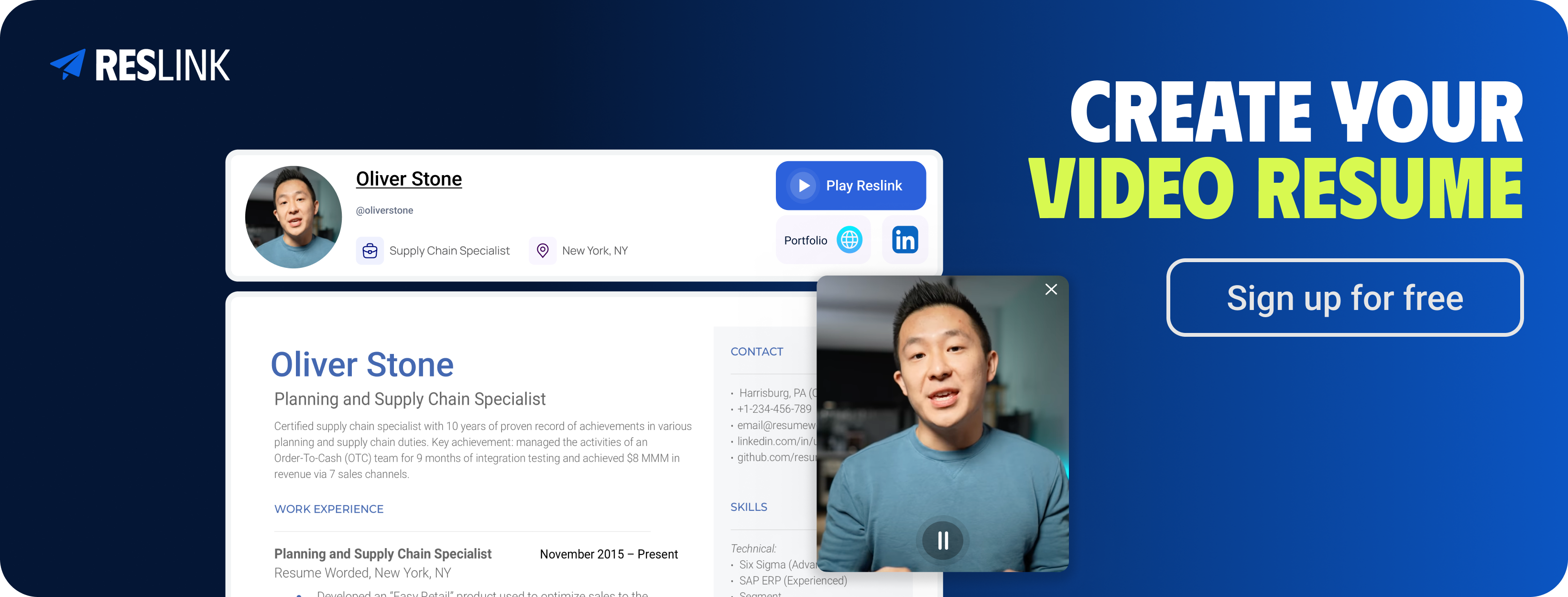
A video resume is the natural evolution of the cover letter. Instead of relying on short paragraphs to tell recruiters about your communication skills, confidence, and personality - you can actually show them. In just 60–90 seconds, you can:
Demonstrate strong communication skills and presence on camera
Convey genuine enthusiasm and motivation for the role
Build a personal connection that words on a page can’t capture
Think of it this way: your written resume and cover letter provide the facts, but a video resume adds the human element. Together, they form a complete application package that makes you more memorable - and far more likely to move forward in the recruitment process.
Not sure where to start? Here is how you can write a great script for your video.
How Reslink Can Help You Create a Great Video Resume
Creating a video resume can feel overwhelming - from writing a script to filming and editing. Reslink makes it simple, streamlined, and free.
Here’s how we help every job seeker:
✅ Tailored Resumes: Create multiple versions for different job applications, each focused on the most relevant skills and experience.
✅ Easy Sharing: Get a secure link you can drop into applications, emails, or send directly to recruiters on LinkedIn.
✅ Built-In Teleprompter: Follow your script while keeping eye contact with the camera, so you sound natural and confident.
✅ PitchAI Script Writer: Generate a clear, professional script tailored to your role and job description.
✅ Engagement Insights: See how recruiters interact with your video - who watched it, where they dropped off, and what kept their attention.
FAQs (Frequently Asked Questions):
1. How long should a cover letter be?
The perfect cover letter length is one page - ideally 250–400 words across 3-4 short paragraphs. That’s long enough to introduce yourself, connect your experience to the job description, and show motivation, but short enough to respect a recruiter’s time. A concise cover letter demonstrates you can communicate clearly and prioritize what matters most.
2. Do recruiters really read cover letters?
Yes - but often differently than you think. Many recruiters scan for key details: why you’re interested in the role, what makes you a good fit, and whether you’ve tailored it to their company. A generic, copy-paste cover letter is easy to skip over. A customized one, paired with a short video resume, increases your chances of getting noticed because it shows both attention to detail and personality.
3. Is a two-page cover letter ever acceptable?
Almost never. Recruiters are reviewing dozens (sometimes hundreds) of applications at once. A two-page cover letter feels overwhelming and can suggest poor communication skills. The only exception is an academic cover letter or certain senior leadership roles, where additional space is needed to detail research, publications, or extensive leadership experience. For most job seekers, keep it short, sharp, and one page maximum.
4. How should I format my cover letter?
Stick to a clean, professional format:
Font: Times New Roman, Arial, or Calibri, 11–12pt.
Spacing: Single space with a blank line between paragraphs.
Margins: 1 inch all around for readability.
Structure: Contact information at the top, followed by greeting, body paragraphs (2–3 max), and a closing paragraph.
Formatting isn’t about being flashy - it’s about making sure your cover letter is easy to read, ATS-friendly, and looks polished next to your resume.
5. What should I include in a video resume?
Keep it to 60–90 seconds. Structure it like this:
Intro: A quick self-introduction (name, job title, what you specialize in). Body: One or two specific examples that highlight your experience, results, or transferable skills.
Close: A confident wrap-up showing enthusiasm for the role or industry. A good video resume script avoids jargon and keeps energy natural. The goal isn’t perfection — it’s showing communication skills, confidence, and enthusiasm, which a written resume can’t capture.
6. Do I need both a cover letter and a video resume?
Yes - they complement each other. A cover letter gives context: why you’re applying, why you’re qualified, and why you’re motivated. A video resume adds the human element: tone of voice, personality, and presence. Together, they make a complete application package that goes beyond just words on a page. Recruiters often remember candidates who combine both.
7. What are the most common mistakes to avoid in cover letters?
Making them too long - anything beyond one page loses impact.
Using a generic template without customizing it to the job.
Repeating your entire resume instead of adding new value.
Including unnecessary details (like every role you’ve ever had).
Forgetting to proofread - small spelling mistakes can undermine professionalism. Think of your cover letter as a highlight reel, not a full transcript. Keep it focused, error-free, and tailored.
8. How can I stand out if every job seeker is writing a cover letter?
This is the challenge - cover letters are valuable, but nearly every job applicant writes one. To stand out, add a video resume to your toolkit. With video, you can:
Showcase communication skills in real time.
Express genuine interest through tone and body language.
Build connections with the recruiter or hiring manager before you even meet. While most applicants stop at text, video makes you memorable. Pairing a concise cover letter with a short video resume is one of the best ways to differentiate yourself in today’s competitive job market.